- 09 Days
- Thimphu, Paro, Punakha, Wangduephodrang
Your journey begins with a breathtaking mountain flight, offering spectacular views of the towering Himalayan giants such as Everest, Kanchenjunga, and Makalu. As the plane approaches Bhutan, you’ll be greeted by the country’s own majestic snow-capped peaks, including the sacred Jhomolhari, Jichu Drake, and Tserimgang. The flight path takes you over the southern hills, known locally as the ‘dwars’—the gateways to the Himalayas—where the foothills gradually rise from the plains to meet the soaring snow-capped mountains.
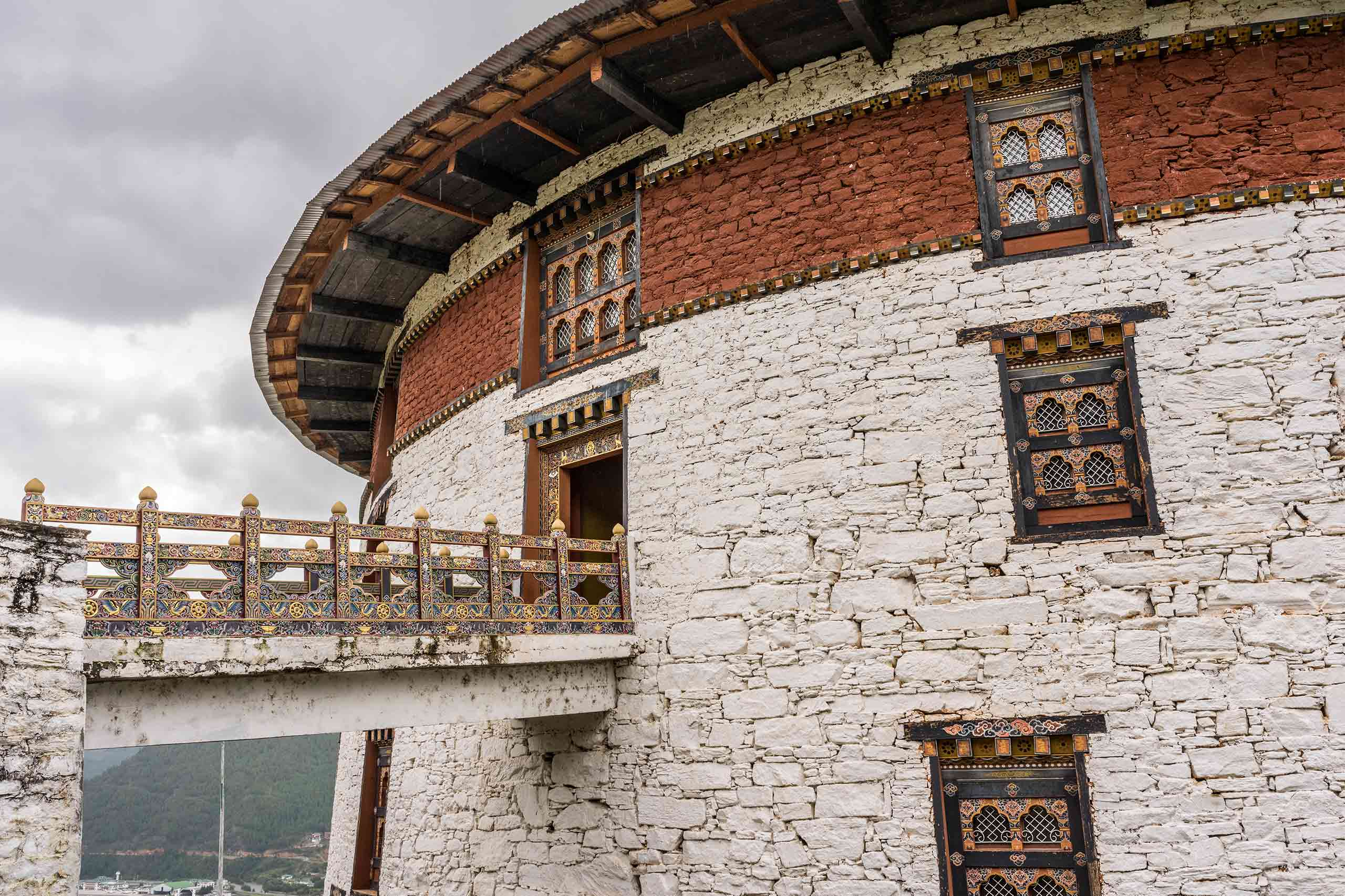
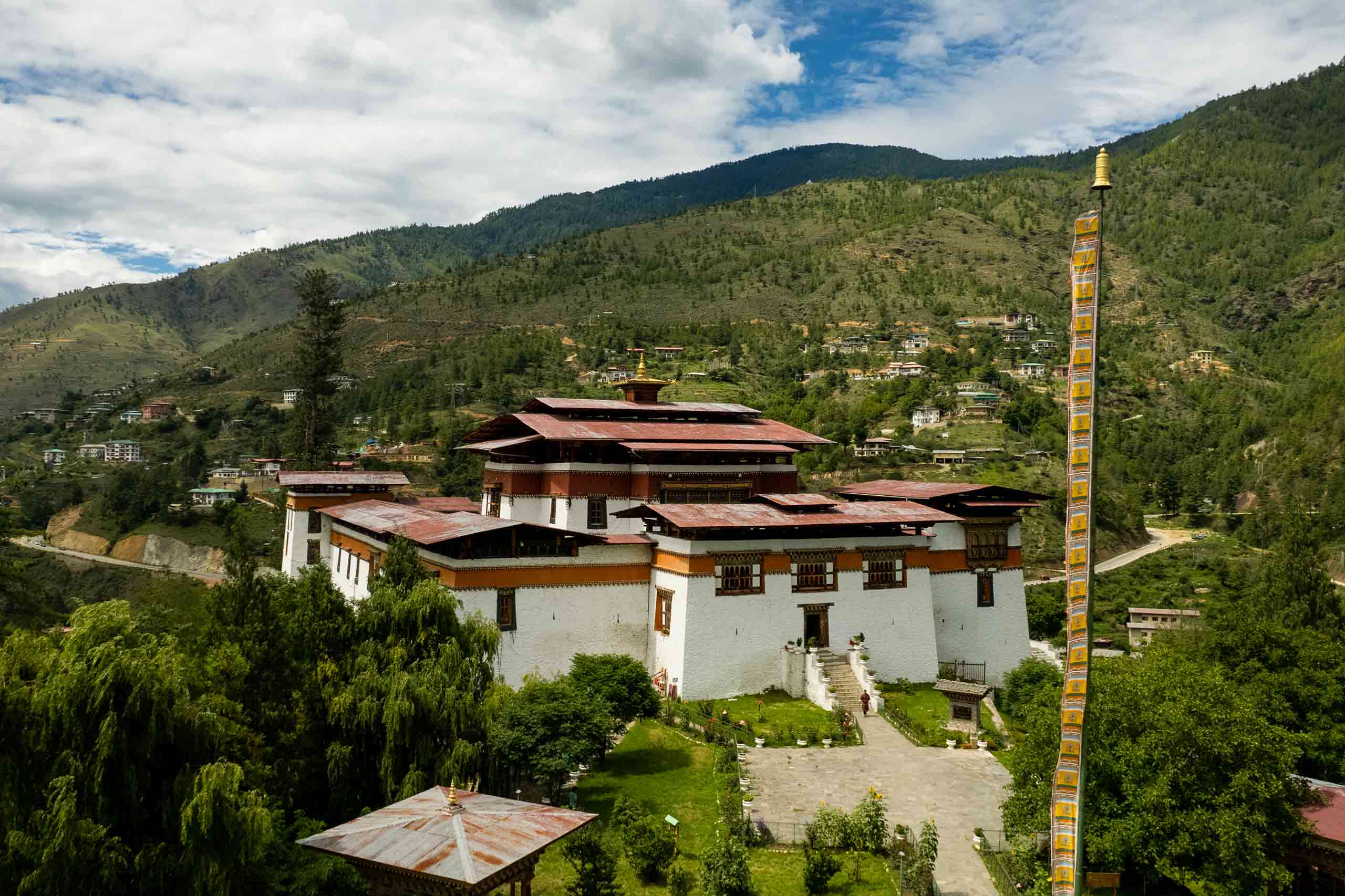
Upon arrival at Paro airport, you will be warmly welcomed by our company’s representative. From there, enjoy a scenic drive to Thimphu, Bhutan’s modern capital—a vibrant city where tradition and contemporary life coexist harmoniously.In the evening, we will visit the impressive Tashichho Dzong, the fortress that houses the throne room of His Majesty the King, various government offices, and serves as the summer residence of the Chief Abbot and the central monastic body.
The rest of the day is at your leisure, or you may choose to explore the lively streets of Thimphu.
Overnight stay at a hotel in Thimphu
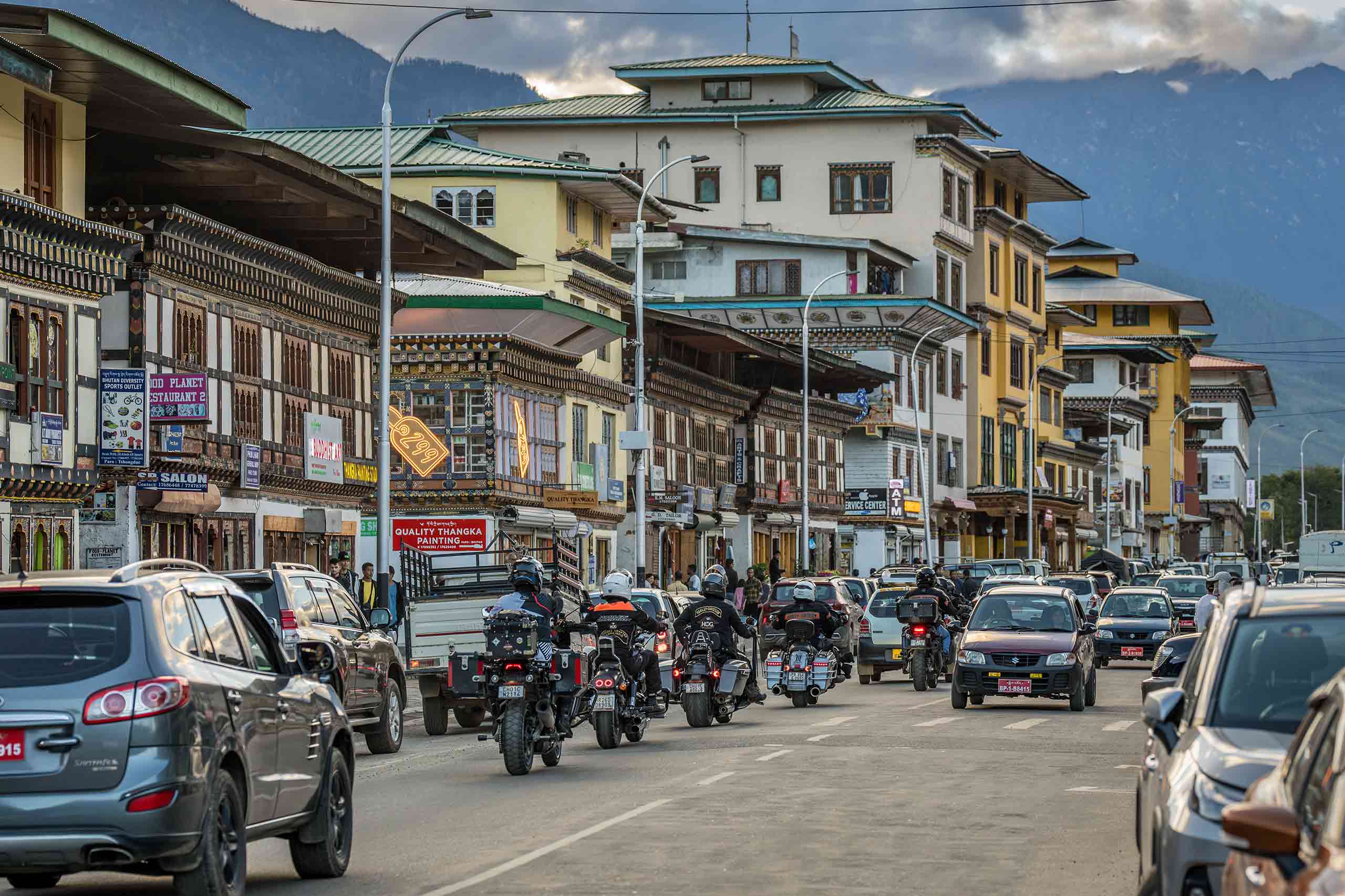
Thimphu, arguably one of the most unique capital cities in the world, serves as Bhutan’s seat of government.This vibrant city is home to the royal family, the civil service, and foreign diplomatic missions. It also functions as the headquarters for numerous internationally funded development projects.
Today’s full-day sightseeing in the Thimphu Valley includes visits to:
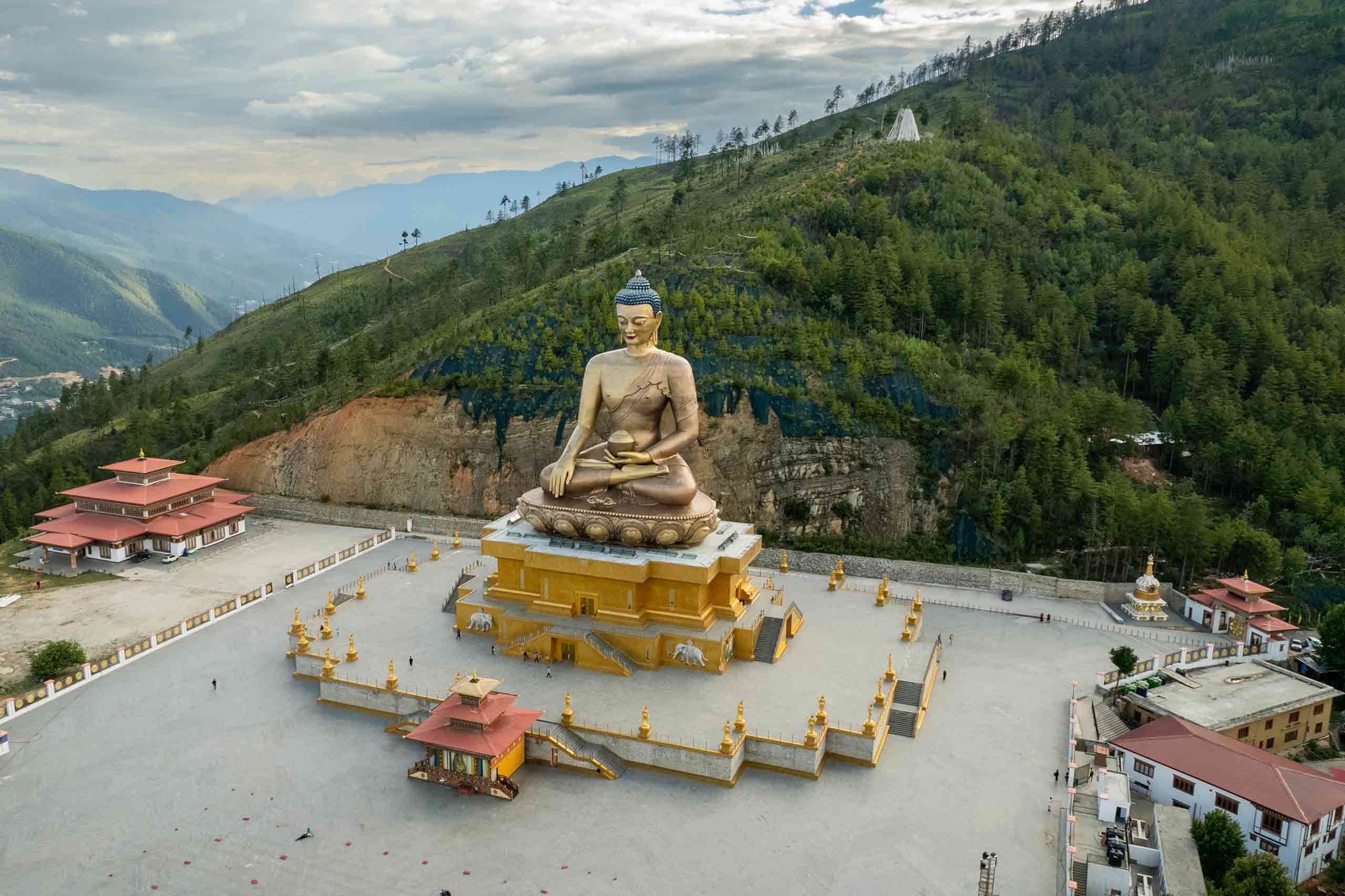
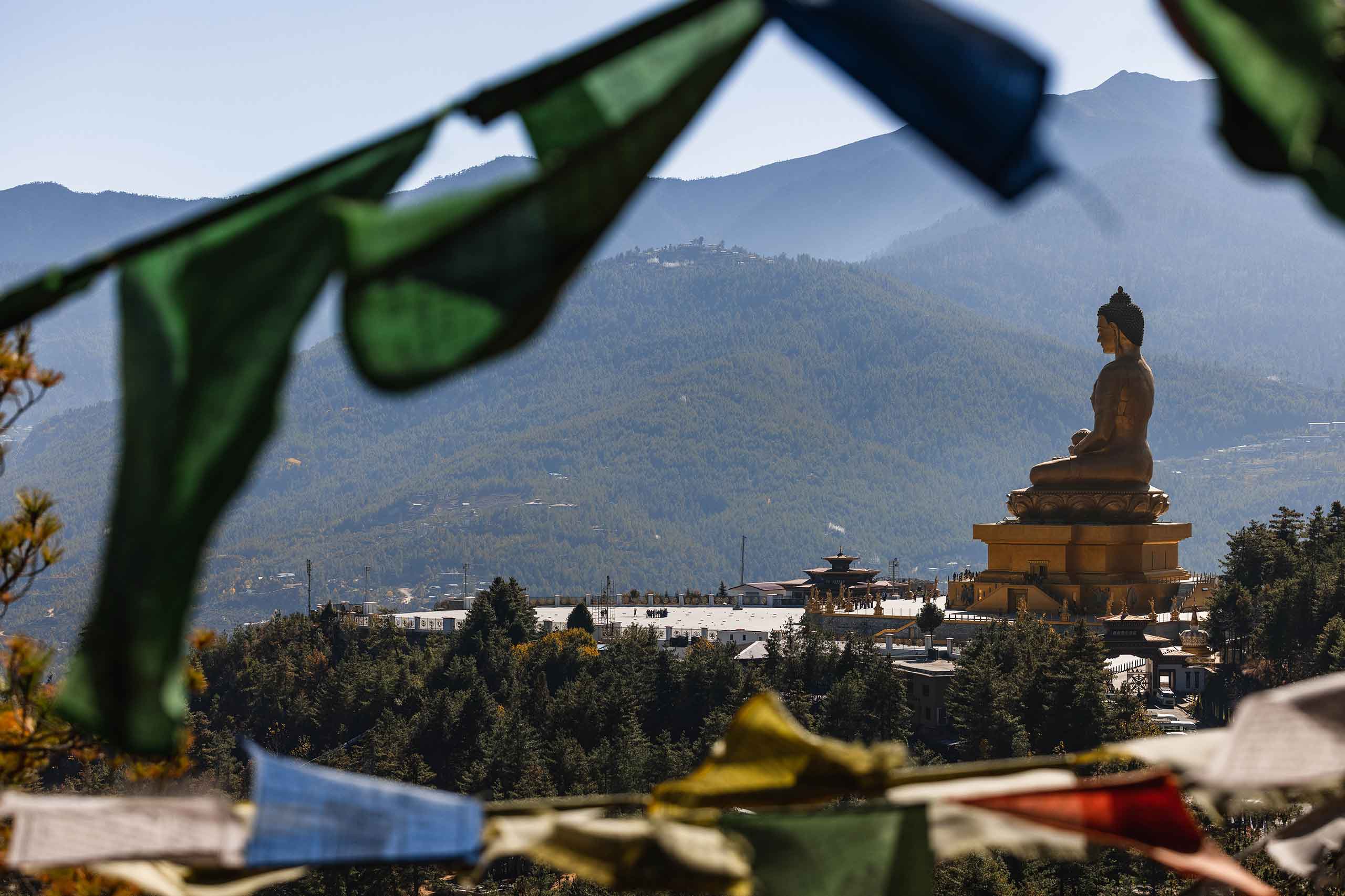
- Buddha Dordenma Statue: Rising 51.5 meters high on a hill above Thimphu, this massive Sakyamuni Buddha statue is among the tallest in Asia and provides stunning, panoramic views of the capital below.
- National Memorial Chorten: First conceived by Bhutan’s third king, His Majesty Jigme Dorji Wangchuck, as a tribute to global peace and prosperity, this iconic monument was completed in 1974. It stands both as a memorial to the beloved monarch—often hailed as the “father of modern Bhutan”—and as a lasting emblem of peace.
- Folk Heritage and Textile Museums: Opened in 2001, these museums provide fascinating insights into Bhutanese material culture and traditional lifestyles. (Closed on Saturdays, Sundays, and government holidays.)
- Institute for Zorig Chusum: Also known as the Painting School, this institute offers a six-year program teaching Bhutan’s 13 traditional arts and crafts. Visitors can observe students practicing their skills. (Closed on Sundays and government holidays; open Saturdays from 10 am to 12 pm.)
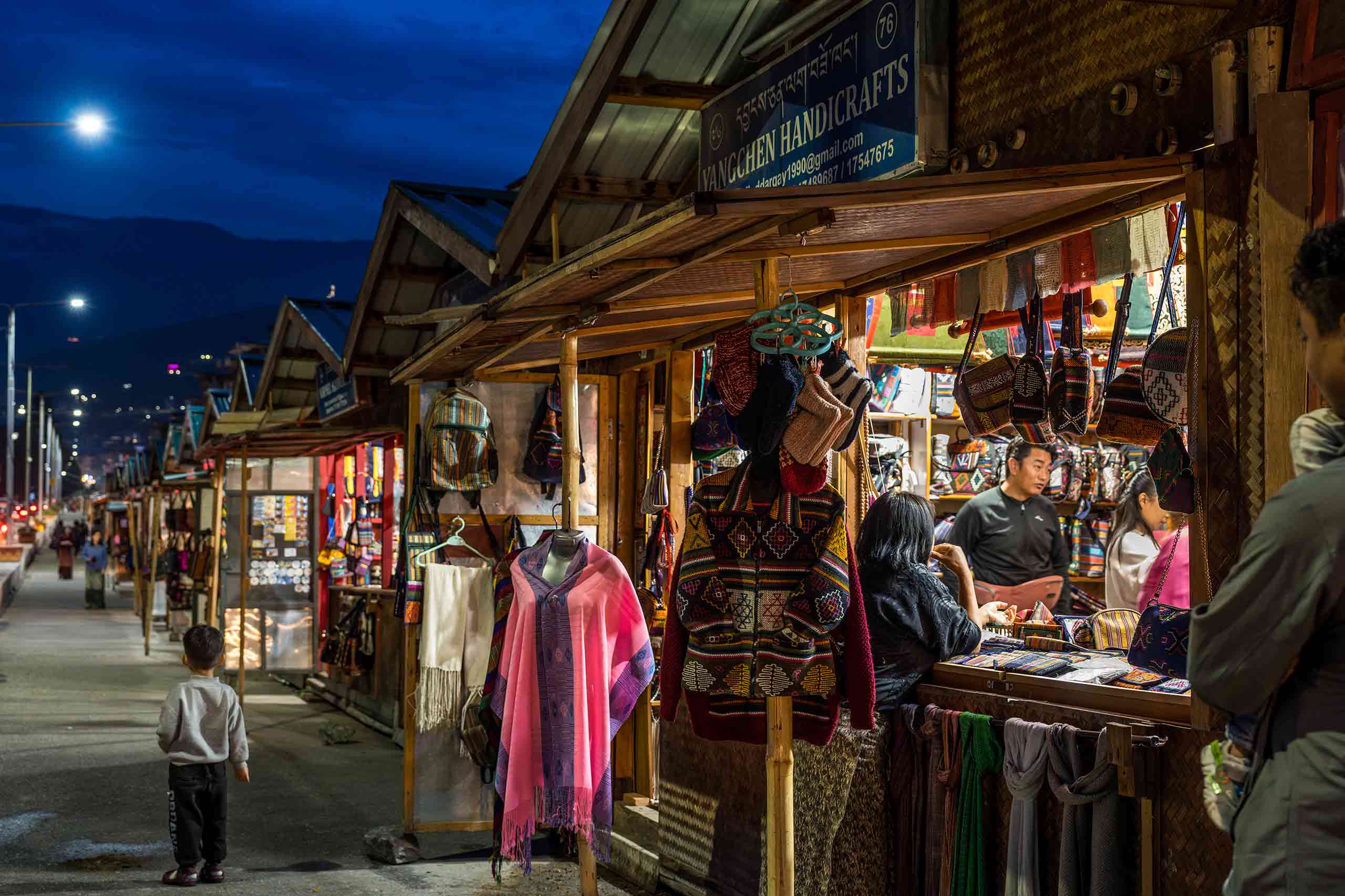
- Handicrafts Emporium: A state-operated center featuring an impressive collection of finely crafted hand-woven textiles, traditional arts, and a thoughtfully selected range of books on Bhutan, Buddhism, and Himalayan heritage.
- National Library: Housing an extensive collection of Buddhist texts and manuscripts dating back several centuries, as well as modern academic works focused on Himalayan culture and religion. (Closed on Saturdays, Sundays, and government holidays.)
In the evening, enjoy a leisurely walk along Thimphu’s main street.
Overnight at your hotel.
After an early breakfast, we will drive to Punakha. En route, drive up to the Dochu-la Pass (3,088m / 10,130ft), pausing briefly to admire the panoramic views and the numerous chortens, Mani walls, and fluttering prayer flags that adorn the highest point on the road. On a clear day, the majestic Himalayan peaks to the northeast come into full view, including (from left to right) Masagang (7,158m), Tsendegang (6,960m), Terigang (7,060m), Jejegangphugang (7,158m), Kangphugang (7,170m), Zongaphugang (7,060m)—a table mountain dominating the remote Lunana region—and finally, Gangkar Puensum, Bhutan’s highest peak at 7,497m.
Before reaching Punakha, we will visit Chimi Lhakhang, a revered fertility monastery founded in 1499 and dedicated to the “Divine Madman,” a 16th-century eccentric monk celebrated for his colorful and humorous folklore tales.
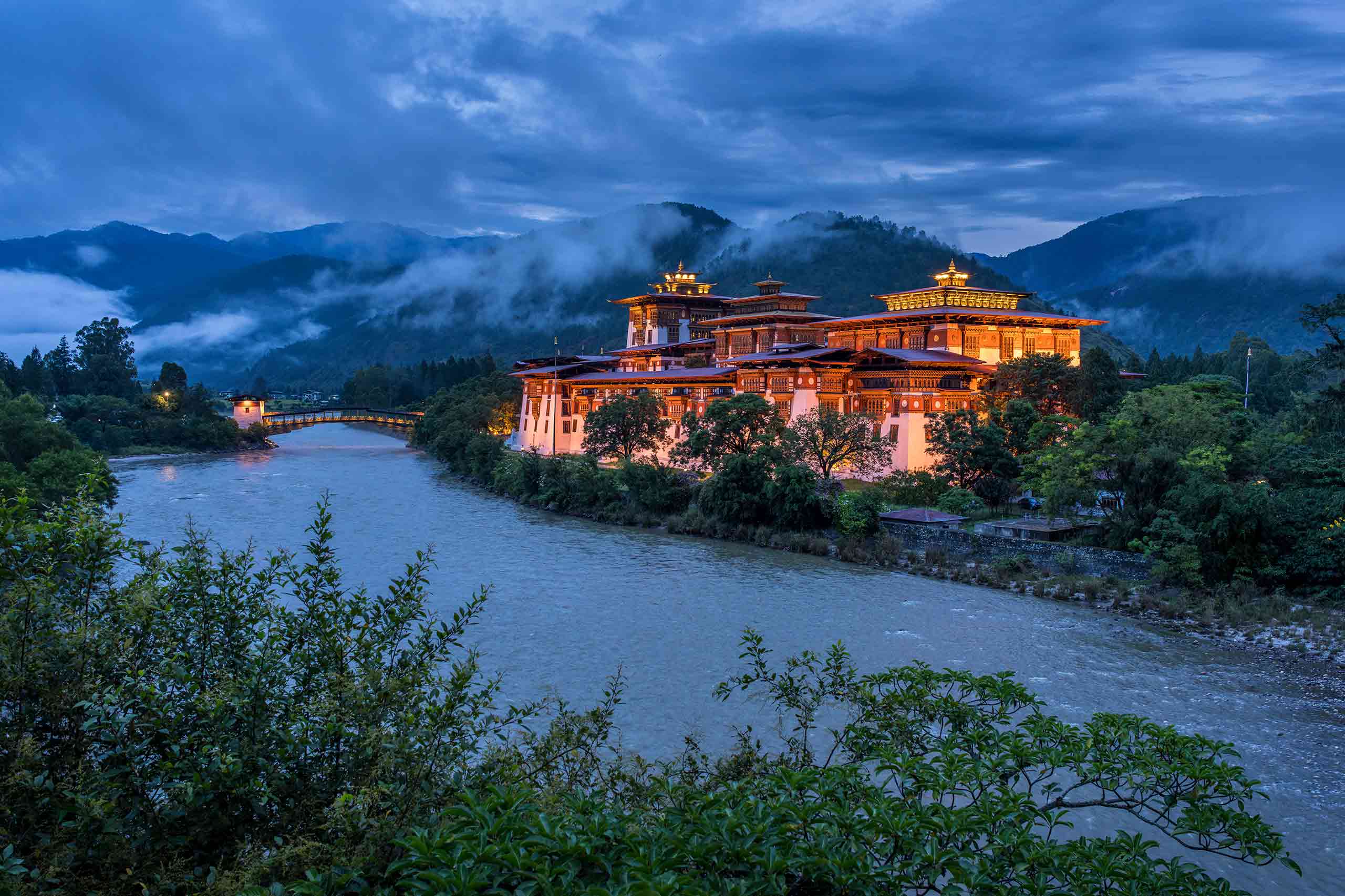
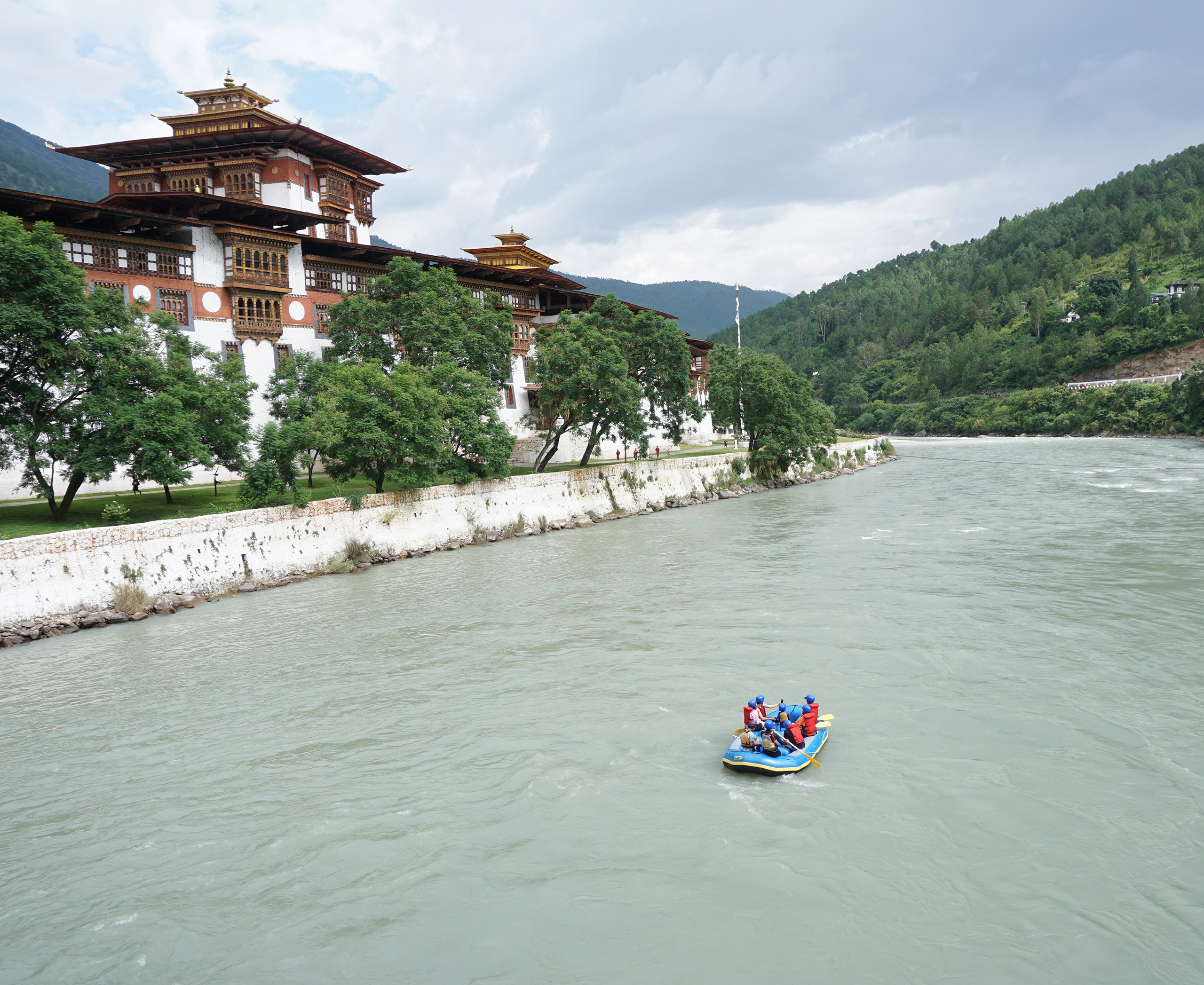
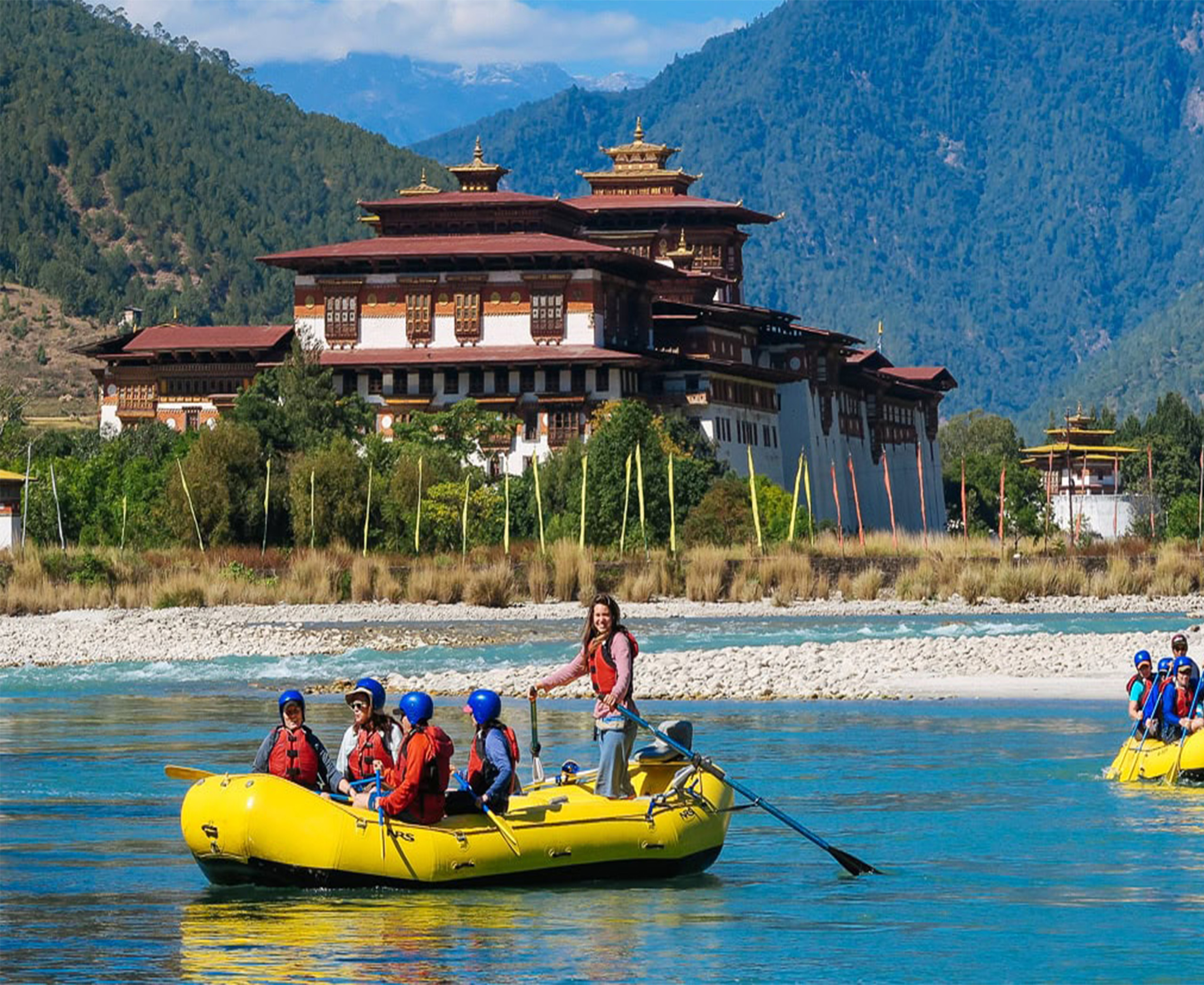
After lunch we will begin our journey toward Punakha, a valley known for its subtropical climate and historical significance. Once you arrive, you’ll explore the magnificent Punakha Dzong, one of Bhutan’s most important and visually striking fortresses.Constructed in 1637 by Zhabdrung Ngawang Namgyal, the spiritual figure who unified Bhutan, the dzong stands at the confluence of the Pho Chu (Father) and Mo Chu (Mother) rivers—a location believed to have been prophesied by Guru Rinpoche.
Today, Punakha Dzong serves as the winter residence for Bhutan’s senior monks and the Je Khenpo (Chief Abbot), who relocate here from the colder capital, Thimphu, during the chillier months. The fortress is celebrated for its masterful craftsmanship, especially the main temple, which rises three stories high and features four beautifully carved wooden pillars, decorated with intricate gold and silver designs. It also holds great national significance as the site of the coronation of Bhutan’s first king in 1907.
Overnight stay at a hotel in Punakha
After breakfast, we’ll head to Gangtey, traveling via Wangduephodrang. Along the way, we’ll stop to explore the impressive Wangduephodrang Dzong, perched on a ridge where two rivers meet. We’ll also visit a local village home to experience the daily life of the residents. The journey continues along a winding mountain road, passing through forests of oak and rhododendron, and crossing a high mountain pass before descending into the scenic Phobjikha Valley. In the evening, enjoy a walk through Gangtey village and visit Gangtey Gompa, the kingdom’s only Nyingmapa monastery.
Overnight stay will be at a guest house or camping under the stars.
Phobjikha, one of Bhutan’s rare glacial valleys, serves as the winter home (from November to March) for the graceful black-necked cranes that migrate from the Tibetan Plateau. Renowned for its serene beauty and tranquil ambiance, the valley is among Bhutan’s most enchanting destinations.Today’s itinerary is devoted to discovering the serene allure and natural splendor of Phobjikha Valley. We will visit the Black-Necked Crane Information Centre, where, during the winter months, you might spot these elegant birds as they settle in for the season.
In the evening, take a relaxed walk along one of the valley’s picturesque trails, winding through serene forests, terraced farmlands, and charming traditional villages—perfect for immersing yourself in the calm and beauty of Phobjikha.
Overnight stay at a farm house/hotel in Phobjikha
In the morning explore Phobjikha Valley and then we’ll begin our 2.5 hour journey back to Thimphu. Along the way, we’ll stop for lunch at a well-known restaurant at Lobesa. Continuing through the mountains, we’ll descend to Dochula for a short tea or coffee break before completing the final leg of the trip to Thimphu. Upon arrival, we’ll check into the hotel.
Dinner and overnight stay at the hotel.
After breakfast, we will begin our 45 minutes journey towards Paro. The day will begin with a visit to Ta Dzong, home to the National Museum. From there, take a scenic walk down the hillside trail to Rinpung Dzong. In the afternoon, explore the historic ruins of Drukgyel Dzong and pay a visit to Kyichu Lhakhang, one of Bhutan’s oldest and most sacred temples.
Overnight stay at a hotel in Paro.
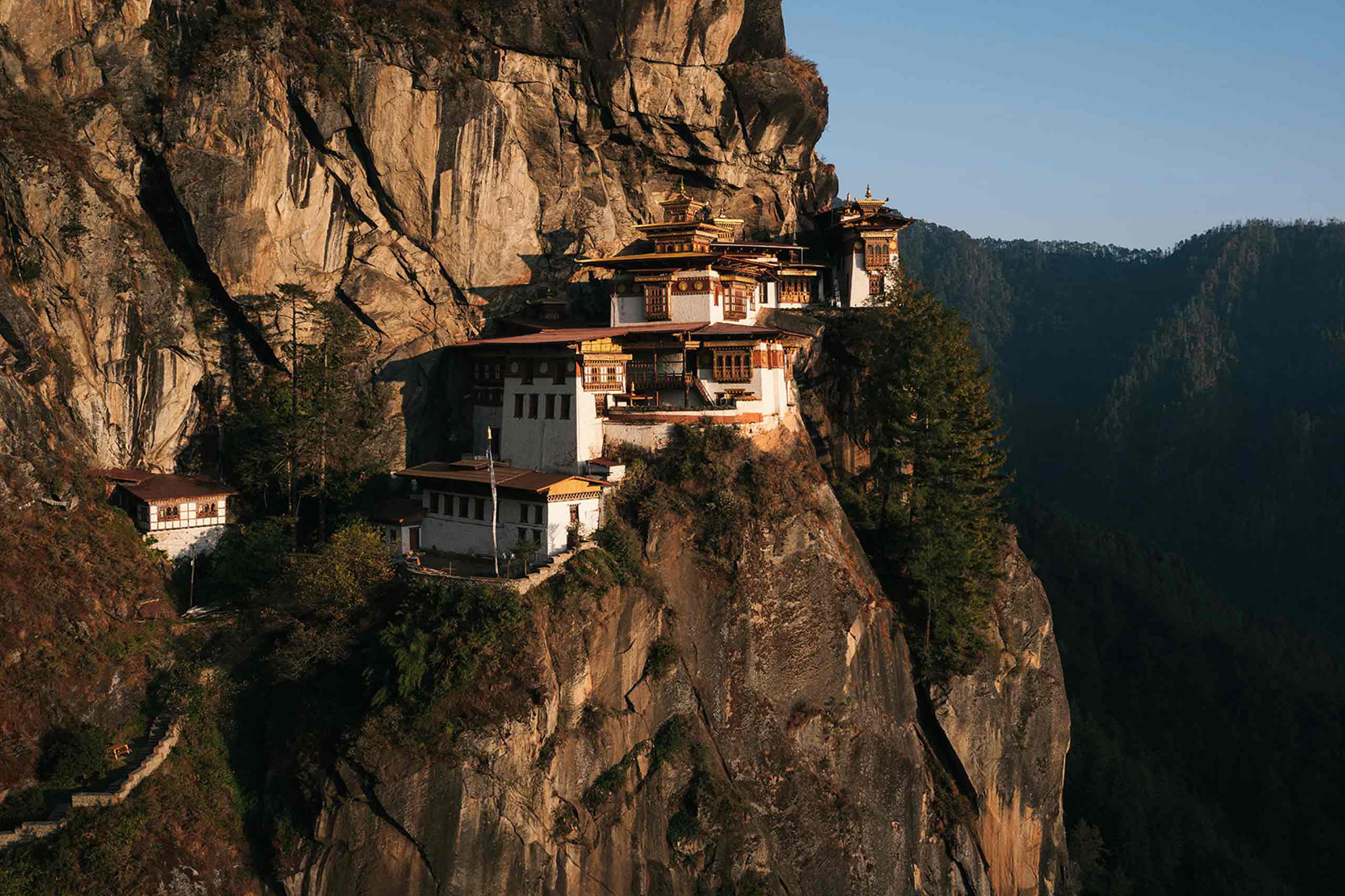
After breakfast, embark on a hike to the iconic Taktsang Monastery. The trail is well-defined, and the uphill trek takes around 1.5 to 2 hours. For those unable to make the hike, horse rides can be arranged up to the cafeteria. The monastery, dramatically perched on a cliff face 900 meters above the valley, offers breathtaking views and holds deep spiritual significance. It is one of Bhutan’s most revered pilgrimage sites.
According to legend, Guru Rimpoche and his consort meditated in a cave here for three months during the 8th century, after bringing the teachings of Buddhism to Bhutan. They are said to have emerged as Guru Dorji Drolo and a tigress to conquer the demons of the valley. The cave later became the foundation of Taktsang Monastery and is believed to mark the birthplace of Buddhism in Bhutan. Nearby, a teahouse offers a chance to rest and enjoy refreshments before returning to Paro for lunch.
Overnight stay at a hotel in Paro
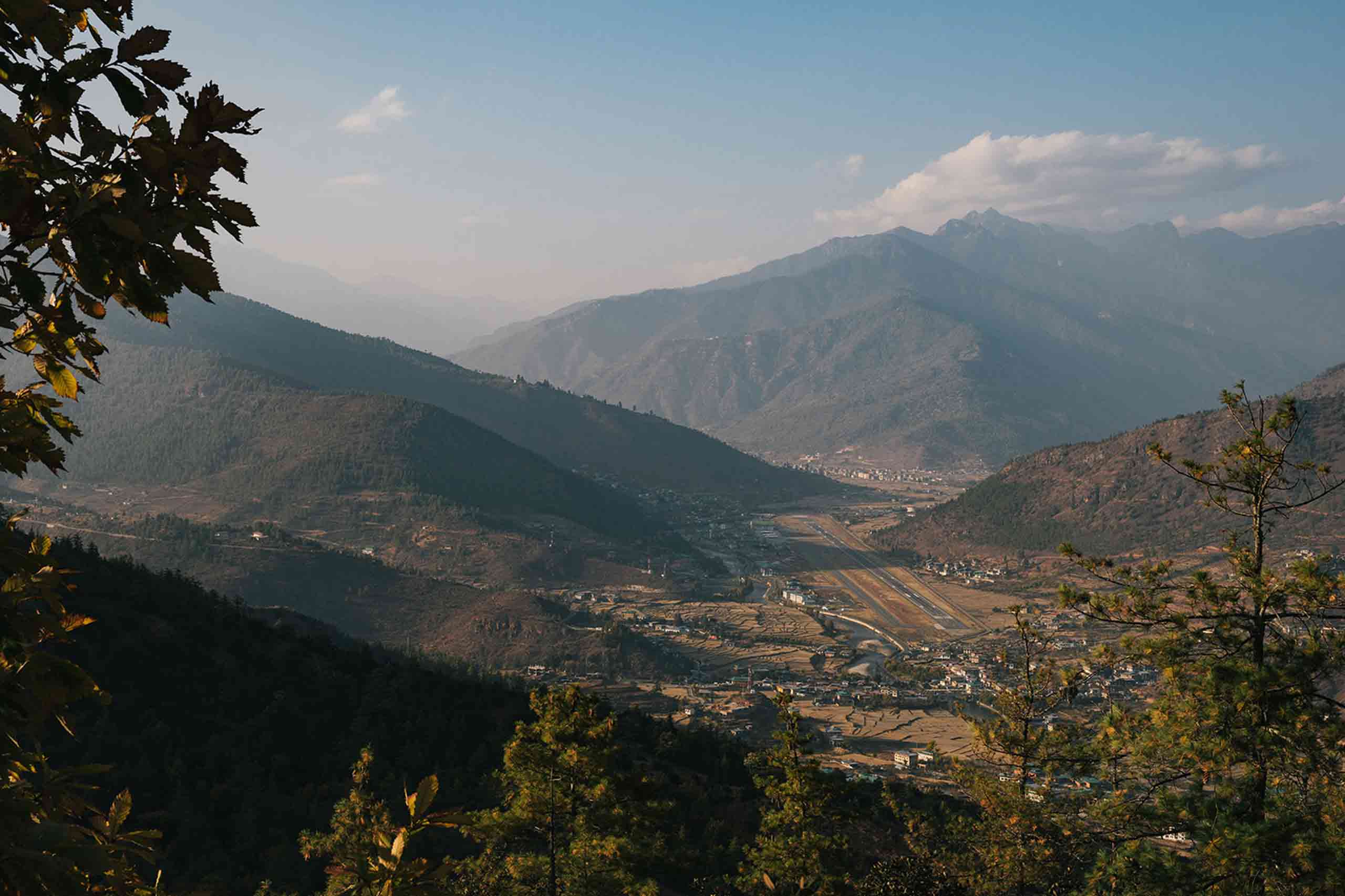
After breakfast, you will be transferred to Paro Airport for your departure flight.
Disclaimer 1: Please note that the listed sights and schedule may change depending on the season, weather conditions, national holidays, or special events. Since our tours are arranged in advance, we reserve the right to adjust the itinerary if unexpected circumstances arise. These adjustments are made to ensure that your overall travel experience in Bhutan is as enjoyable and smooth as possible.
Disclaimer 2: All of our Bhutan tours are private and fully customizable, designed to suit your travel dates and personal interests. Whether you want to spend more time exploring specific destinations or focus on activities you enjoy most, we’ll tailor the journey just for you.
Click on the ‘Tailor-Design This Tour’ tab above to start creating your perfect Bhutan experience.
This tour is available year-round, so you can plan your visit whenever it suits you best.
What is included
- Bhutan Tourist Tariff Royalty & Visa fees.
- All private excursions and transfers in superior air-conditioned vehicle.
- Local English speaking guide/tour leader.
- Experienced driver
- All entrance fees and permits.
- Double room on twin sharing basis in government approved 3 star hotels
- Single room supplement is additional of USD 45 per night per room
- All three meals (does not cover water and other beverages ordered in hotels/restaurants)
- Bottled mineral water for the entire trip (except water ordered in the hotels and restaurants)
- Afternoon tea and snacks
- Full service & assistance before, during and after your Bhutan trip
What is not included
- All personal expenses such as bars, beverages, laundry, telephone and tips.
- Medical / Travel Insurance.
- Airfare to and from Bhutan (we can arrange you tickets for you if you wish)
- Any other beverages (alcoholic or non-alcoholic) including water ordered in restaurants and hotels
- Wire transfer
- Laundry
- Gratuity/Tip for guides and drivers