Festival / Tshechu in Bhutan: A Celebration of Faith and Culture
What is a Tshechu?
The word “Tshechu” (ཚེས་བཅུ་) literally means “tenth day” in Dzongkha, Bhutan’s national language. It refers to a religious festival celebrated on the 10th day of a lunar month in the Bhutanese calendar, usually dedicated to Guru Padmasambhava (Guru Rinpoche)—the revered Buddhist master who brought Vajrayana Buddhism to Bhutan in the 8th century.
Each Tshechu takes place in a different month depending on the region, monastery, or dzong (fortress), with Thimphu Tshechu, Paro Tshechu, and Punakha Tshechu being the most famous.
The tradition of Tshechu dates back to the 17th century when Zhabdrung Ngawang Namgyal, the unifier of Bhutan, and his successor Tenzin Rabgye, institutionalized the festival. Its core purpose was to spread the teachings of Guru Rinpoche and strengthen Buddhist values among the people.
Purpose and Significance
Tshechus are not just religious observances; they are social, cultural, and spiritual events with deep significance:
- Spiritual Merit: Attending a Tshechu is believed to cleanse sins, accumulate merit (karma), and bring blessings for a better rebirth.
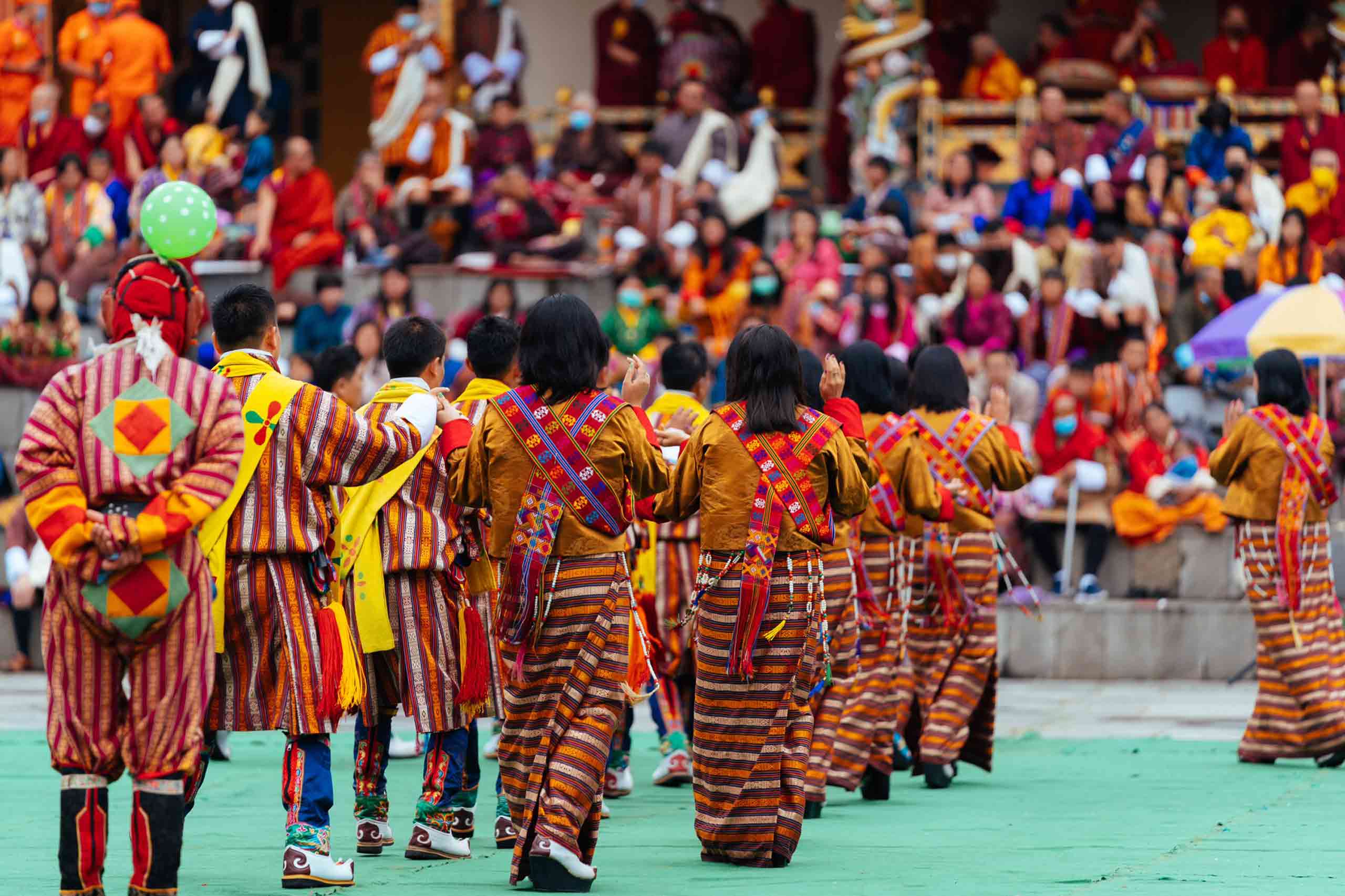
- Community Gathering: It’s a time when people from remote villages come together dressed in their finest attire, often after days of travel.
- Cultural Preservation: Tshechus preserve ancient dance forms, music, and oral traditions passed down for centuries.
Main Elements of a Tshechu
1. Cham (Religious Mask Dances)
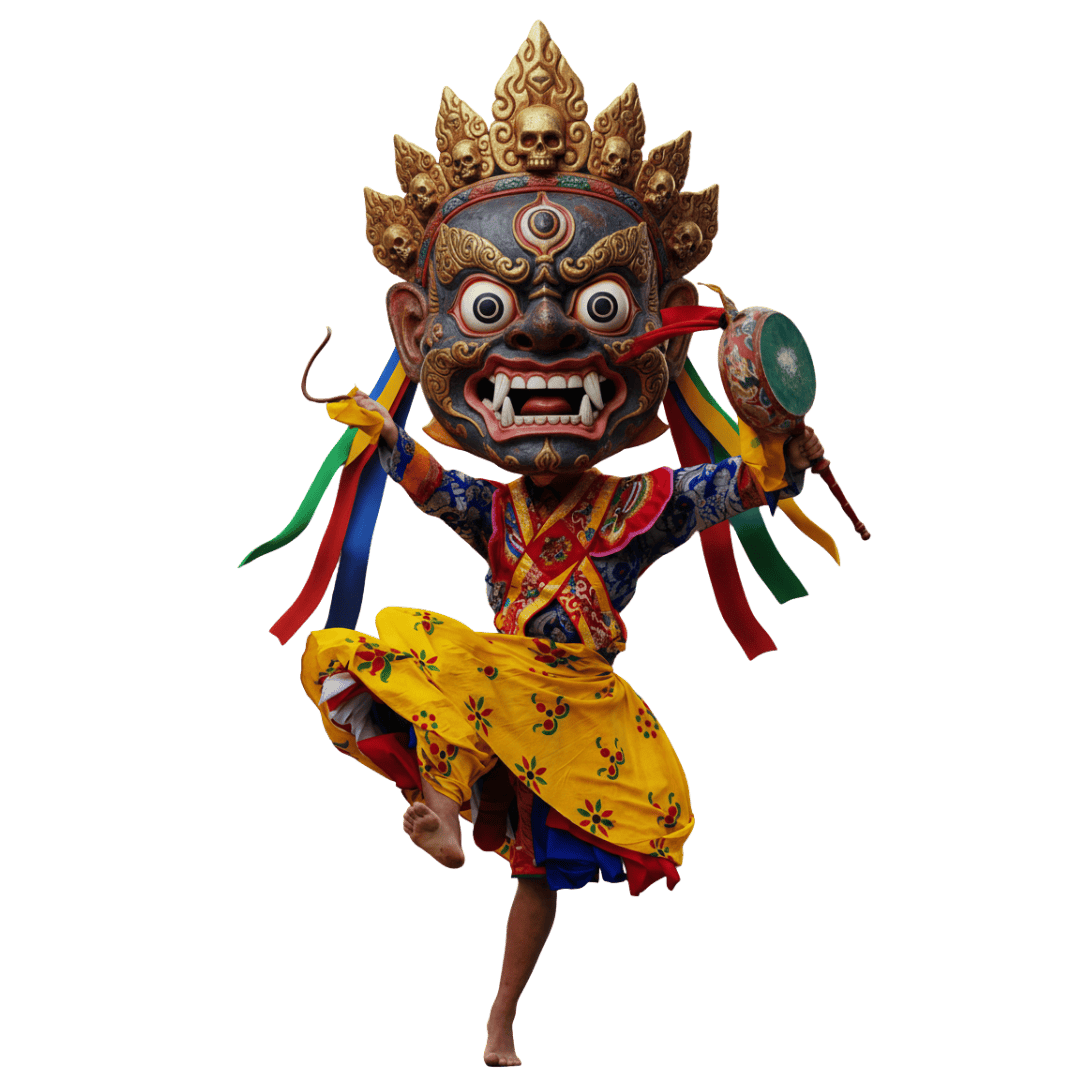
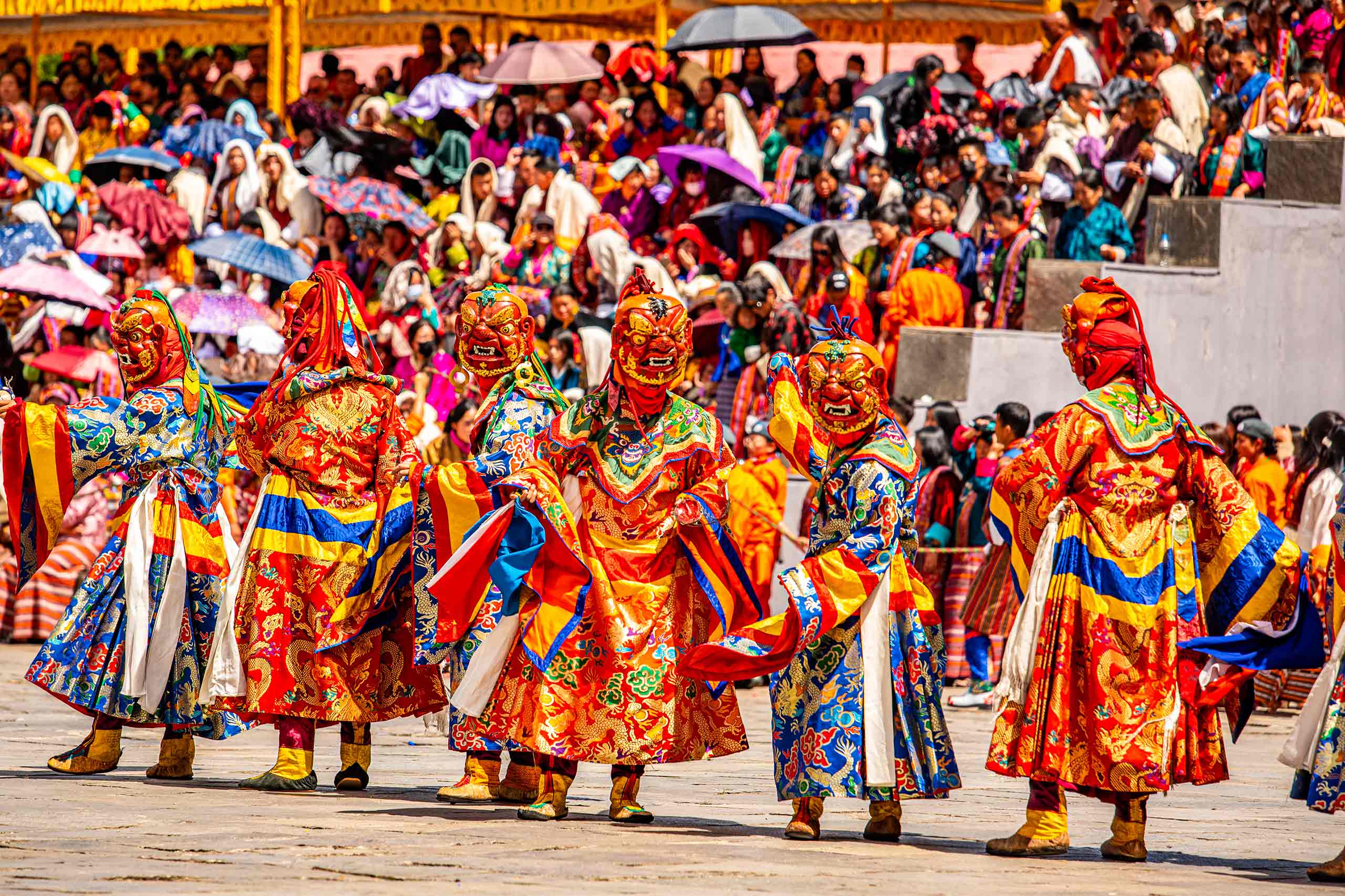
At the heart of every Tshechu are the cham dances, sacred masked dances performed by monks and laymen. Each dance has a symbolic meaning and usually narrates spiritual stories or cosmic battles between good and evil.
- Black Hat Dance (Shanag Cham): Represents the removal of evil and obstacles.
- Dance of the Eight Manifestations of Guru Rinpoche: Depicts Guru Rinpoche’s eight forms used to tame demons and spread Dharma.
- Dance of the Terrifying Deities: Symbolizes the liberation of souls and the protection of sentient beings.
- Raksha Mangcham (Dance of the Judgement of the Dead): A dramatic depiction of death and the afterlife, reminding people to live a virtuous life.
Each dance is precise and codified, often accompanied by traditional music from instruments like trumpets, cymbals, and drums.
2. Costumes and Masks
Performers wear elaborate silk costumes and ornate masks representing deities, demons, animals, and historical figures. These masks are sacred and believed to invoke the deities they represent.
3.Thongdrol (Giant Religious Scroll)
One of the highlights of a Tshechu is the unfurling of the Thongdrol, a gigantic appliqué thangka (religious painting) usually depicting revered Buddhist figure such as Guru Rinpoche (padmasambhava), the Buddha, Zhabdrung Ngawang Namgayel or a key other Buddhist deity. It is believed that merely viewing the thongdrol purifies the sins of the viewer.
- Thondrols are usually unveiled in the early morning hours on the last day of the festival and are displayed only for a few hours.
Duration and Timing
Tshechus typically last three to five days, depending on the location. Each day has a structured program of cham dances and rituals.
Since the Bhutanese calendar is lunar, dates shift every year when converted to the Gregorian calendar. Popular Tshechus like the Paro Tshechu (March/April) and Thimphu Tshechu (September/October) attract both locals and international tourists.
Tshechus are a vivid tapestry of Bhutanese identity—where religion, tradition, community, and festivity merge into one grand celebration. For visitors, witnessing a Tshechu is not just a cultural event but a spiritual journey that offers a rare insight into the soul of Bhutan.
Festival Dates for the year 2025
Click here to view the festival dates for the year 2025
Festival Dates for the year 2026
Click here to view the festival dates for the year 2026
Disclaimer: All our tours and treks are private and fully customizable.
- You can schedule your trip for any date that suits you—we’re here to assist every step of the way.
- Tailor your itinerary to match your interests by clicking the ‘Tailor-Design this Tour’ tab.
What is included
- Bhutan Tourist Tariff, Royalty & Visa fees.
- All private excursions and transfers in superior air-conditioned vehicle.
- Local English speaking guide/tour leader.
- Experienced driver
- All entrance fees and permits.
- Double room on twin sharing basis in government approved 3 star hotels
- All three meals (does not cover water and other beverages ordered in hotels/restaurants)
- Bottled mineral water for the entire trip
- Afternoon tea and snacks
What is not included
- All personal expenses such as bars, beverages, laundry, telephone and tips.
- Health / Travel Insurance.
- Any other beverages (alcoholic or non-alcoholic) including water ordered in restaurants and hotels
Tailor Design Tour
get in touch with our team
At our core, we believe that your holiday should reflect your interests, pace, and travel style. That’s why our expert consultants specialize in designing fully customized tours that are as unique as you are. Whether you’re travelling solo, as a couple, with friends, or as part of a larger group, we’re here to craft a personalized experience that opens the door to your Himalayan dream.