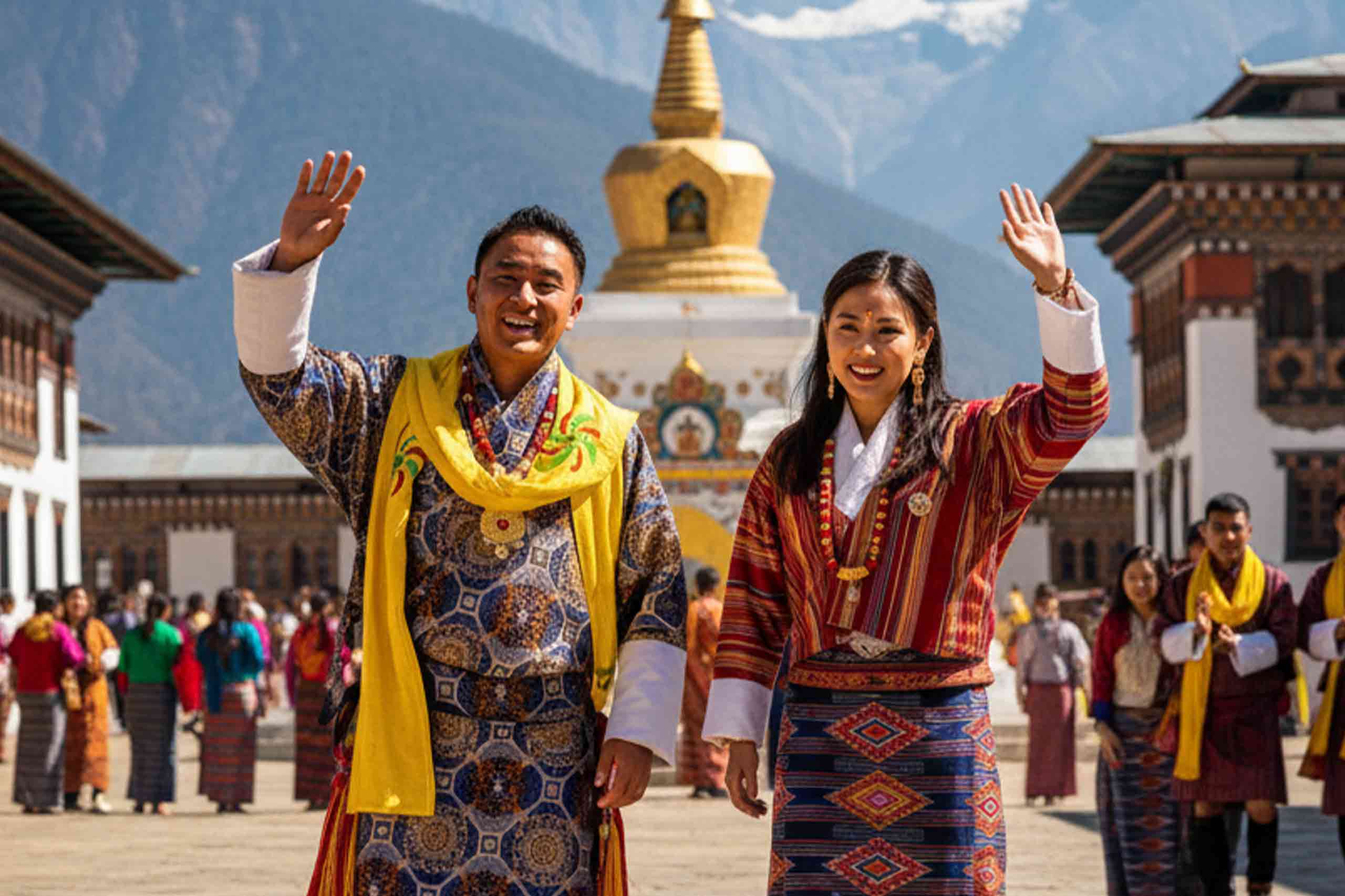
A traditional Bhutanese wedding is a deeply spiritual and culturally rich ceremony that intertwines Buddhist rituals, family traditions, and communal blessings. Bhutanese weddings are centered on sacred rites performed by monks and lamas, emphasizing the sanctity of marriage and the couple’s bond. Traditional Bhutanese wedding and vow renewal ceremonies can be thoughtfully customized to blend spiritual authenticity with personal preferences. Couples may choose to include western elements such as the exchange of rings, or enhance the experience with elaborate local customs like masked dances, archery demonstrations, and special fertility blessings conducted by Buddhist monks.
Key Rituals in a Bhutanese Wedding include:
- Auspicious Date Selection
Astrologers determine the most favorable date for the wedding, aligning it with the couple’s birth charts and lunar cycles to ensure harmony and prosperity. - Lhabsang (Incense Offering)
On the chosen day, monks chant mantras and burn incense to appease local deities, seeking their blessings for a smooth and joyful union. - Lighting of Butter Lamps
The bride and groom light butter lamps after prostrating six times, three times at the Head Lama and three at the main altar. This act symbolizes the illumination of their shared life ahead. - Thrisor (Purification Ritual)
A purification ceremony conducted by the Head Lama and monks cleanses the couple’s body, speech, mind, and soul, removing past sins and negative energies. - Changphoed (Shared Drink)
The couple drinks ara (locally brewed alcohol) from the same wooden bowl, symbolizing their unity and shared future. - Tsepamey Choko (Blessing for Longevity)
A ritual invoking the God of Longevity, performed by the Head Lama, to bless the couple with a long, happy marriage. - Zhugdrey Phunsum Tshogpa (Food Sharing)
Food offerings are made to local deities, then shared among the couple and guests, symbolizing communal harmony and prosperity. - Exchange of Khadhar (White Scarves)
The couple exchanges white silk scarves as a sign of purity and respect. They also present these scarves to their parents, expressing gratitude for their upbringing.
Bride wears a kira, an ankle-length dress made of handwoven fabric, paired with a tego (jacket) and wonju (blouse). Groom dresses in a gho, a knee-length robe, secured with a kera belt. These garments are crafted from colorful, handwoven textiles that signify status and wealth, reflecting Bhutan’s rich textile heritage.
What is included
- Bhutan Tourist Tariff Royalty & Visa fees.
- All private excursions and transfers in superior air-conditioned vehicle.
- Local English speaking guide/tour leader.
- Experienced driver
- All entrance fees and permits.
- Double room on twin sharing basis in government approved 3 star hotels
- Single room supplement is additional of USD 45 per night per room
- All three meals (does not cover water and other beverages ordered in hotels/restaurants)
- Bottled mineral water for the entire trip (except water ordered in the hotels and restaurants)
- Afternoon tea and snacks
- Comfortable SUV and a reliable driver
- Visa fee and processing charges
- Tourism Development Fund
- Government taxes
- All administrative cost
- Full service & assistance before, during and after your Bhutan trip
What is not included
- All personal expenses such as bars, beverages, laundry, telephone and tips.
- Medical / Travel Insurance.
- Airfare to and from Bhutan (we can arrange you tickets for you if you wish)
- Any other beverages (alcoholic or non-alcoholic) including water ordered in restaurants and hotels
- Travel or health insurance
- Wire transfer
- Laundry
- Gratuity/Tip for guides and drivers